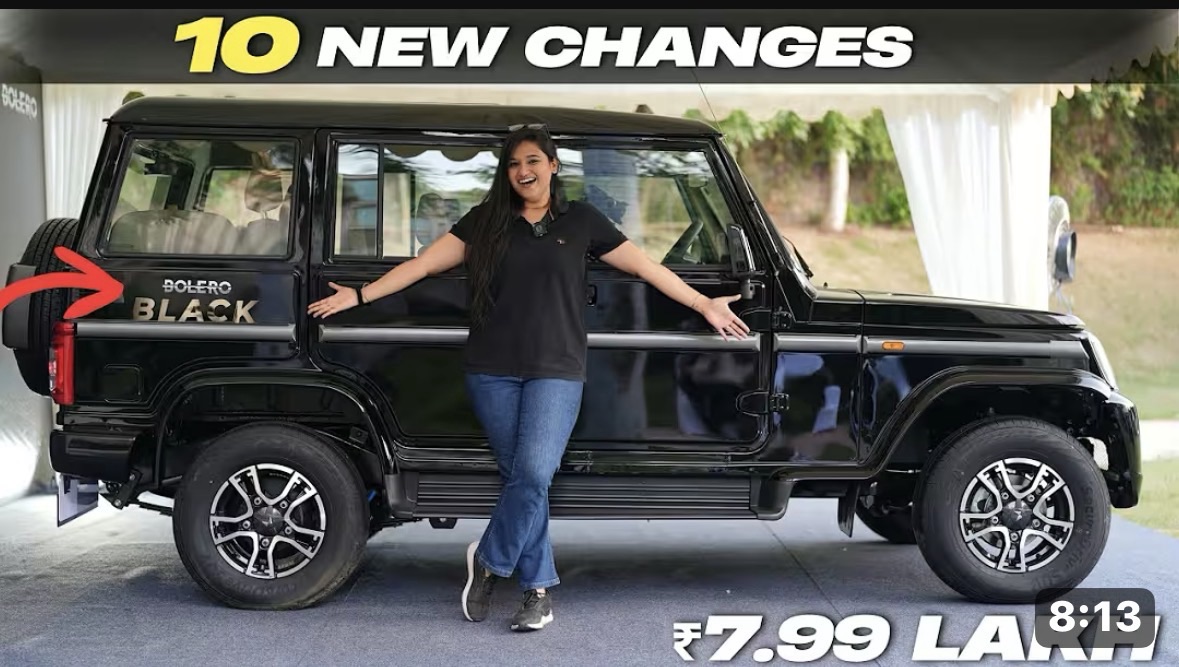

The “New Bolero” refers to the updated 2025 Mahindra Bolero facelift, which was officially launched in India on October 6, 2025. This rugged, utilitarian SUV retains its iconic tough character while incorporating modern design tweaks, enhanced interiors, and new features for better comfort and practicality. It’s positioned as a reliable workhorse for urban and rural use, competing with vehicles like the Tata Safari Storme or older-gen SUVs. Below is a comprehensive breakdown of its specifications, features, pricing, and more, based on the latest official announcements and reviews.
Key Highlights
- Launch Date: October 6, 2025 (currently available for booking at Mahindra dealerships).
- Platform: Retains the proven ladder-frame chassis but with refined suspension for better ride quality.
- Target Audience: Ideal for fleet operators, rural buyers, and those needing a durable 7-seater with high ground clearance.
- Warranty: Standard 3 years/1 lakh km (extendable).
Pricing (Ex-Showroom, India)
The New Bolero starts at ₹7.99 lakh, making it more affordable post-GST reductions (up to ₹1.27 lakh off across variants). Prices have been adjusted effective September 6, 2025. On-road prices vary by city (e.g., Delhi: add ~₹1.5-2 lakh for registration, insurance, etc.). Variant Ex-Showroom Price (₹ Lakh) Key Additions Over Lower Variant B4 (Base) 7.99 Basic features, manual AC, steel wheels. B6 8.69 Power windows (all doors), remote keyless entry, fabric seats. B6 (O) 9.09 Rear wiper/washer, static bending headlamps, driver info display. B8 (Top-End, New) 9.69 7-inch touchscreen infotainment, steering-mounted controls, USB-C charging.
Note: Prices are introductory and may vary by state. Check Mahindra’s official site for exact on-road figures and festive offers (up to ₹50,000 discounts in October 2025).
Design and Exterior
The 2025 facelift keeps the boxy, ladder-on-frame silhouette but adds a bolder, more premium look:
- Front: Redesigned grille with vertical chrome slats and Mahindra’s new “Twin Peaks” logo. Updated bumpers with integrated fog lamps for better visibility.
- Headlamps: Halogen units with static bending functionality (on higher variants); no full LED projectors.
- Wheels: 15-inch dual-tone diamond-cut alloy wheels (replaces steel rims on base); 215/75 R15 tires.
- Side Profile: Angular wheel arches, black plastic cladding, flush door handles, side steps for easy ingress.
- Rear: Updated bumper with fog lamps, tailgate-mounted spare wheel, roof spoiler with high-mounted stop lamp.
- Dimensions: Unchanged – L: 3995 mm, W: 1745 mm, H: 1880 mm, Wheelbase: 2680 mm, Ground Clearance: 180 mm.
- Colors: 5 options – Diamond White, Dazzling Silver, Bolero Black, Lake Blue, Desert Gold.
The design emphasizes ruggedness with subtle urban sophistication, weighing ~1,450 kg (kerb).
Interior and Comfort
The cabin focuses on functionality over luxury, seating 7 (2+3+2 layout with flip-up third-row seats). Updates make it more practical:
- Dashboard: Hard plastics with silver accents; new Mocha Brown theme on higher variants (similar to Scorpio N).
- Seating: Fabric upholstery, adjustable driver seat, armrests on front/middle rows. Third row is best for short trips.
- Space: 690-litre boot (seats up; expands to 1,700 litres with third row folded). Headroom and legroom are generous for its class.
- Comfort Features:
- Manual AC with rear vents.
- Power windows (front/rear on B6+).
- Tilt steering, 12V front socket + USB-A/C ports (front only).
- New B8 additions: 7-inch touchscreen (Bluetooth, Android Auto/Apple CarPlay), steering audio controls.
No captain seats or premium materials – it’s built for durability, not plushness.
Engine, Performance, and Transmission
No major mechanical changes; it sticks to the proven diesel-only setup for torque-heavy duties:
- Engine: 1.5-litre mHawk diesel (4-cylinder, naturally aspirated).
- Power: 75 PS @ 3,600 rpm.
- Torque: 210 Nm @ 1,600-2,200 rpm.
- Transmission: 5-speed manual (no automatic option).
- Drivetrain: Rear-wheel drive (RWD).
- Fuel Efficiency: 16.1 kmpl (ARAI-certified; real-world ~14 kmpl city/highway).
- Suspension: Front – Independent with coil springs; Rear – Rigid axle with leaf springs (tuned for load-carrying).
- Brakes: Front discs, rear drums; 0-100 km/h in ~15 seconds.
It excels in low-speed torque for off-road/light trails but feels basic on highways.
Safety Features
Basic but improved over the pre-facelift model (meets Bharat NCAP standards):
- Dual front airbags (driver + co-driver).
- ABS with EBD, cornering brake control.
- Rear parking sensors (no camera).
- Seatbelt reminders (front only), speed-sensing door locks.
- ISOFIX child seat anchors.
- No ESP, hill-hold, or 360-degree camera – safety is functional, not advanced.
Pros and Cons
Pros:
- Unbeatable reliability and low maintenance (ideal for fleets).
- High ground clearance for bad roads.
- Strong low-end torque and 7-seater versatility.
- Affordable pricing with recent cuts.
Cons:
- Basic interiors and no automatic variant.
- Limited features (no rear AC controls or cruise control).
- Noisy cabin at high speeds; average refinement.
- Third-row comfort is compromised for adults.
Comparisons and Verdict
- Vs. Bolero Neo (Facelifted sibling): The standard Bolero is more utilitarian (₹8.49-11.40 lakh); Neo adds a sleeker body, 100 PS engine, and 9-seater option in Plus variant (₹10.77 lakh).
- Vs. Competitors: Cheaper than Tata Nexon EV or Hyundai Venue but lags in tech/safety. Best for value-driven buyers.
The New Bolero 2025 is a refreshed icon – tougher, slightly techier, but still the “desi” SUV king for India’s diverse terrains. For test drives or bookings, visit Mahindra’s website or a local dealer. If you meant the Bolero Neo or something else, let me know!